Wide or Narrow Feet Here’s How to Find the Right Socks
Best Socks for Narrow vs. Wide Feet: How to Choose the Right Fit
Foot width affects how socks fit, stretch, and feel throughout the day. Narrow feet need structured, snug socks that prevent bunching. Wide feet need stretch, room in the toe area, and non-binding cuffs. The right features improve comfort and durability.
What Socks Are Best for Narrow or Wide Feet?
Narrow feet: Choose socks with arch compression, slimmer cuts, lower stretch, and anatomical shaping.
Wide feet: Choose stretchy blends, wider toe areas, cushioned soles, and soft non-binding cuffs.
Fit matters just as much as size. A well-fitting sock reduces friction, prevents blisters, and lasts longer.
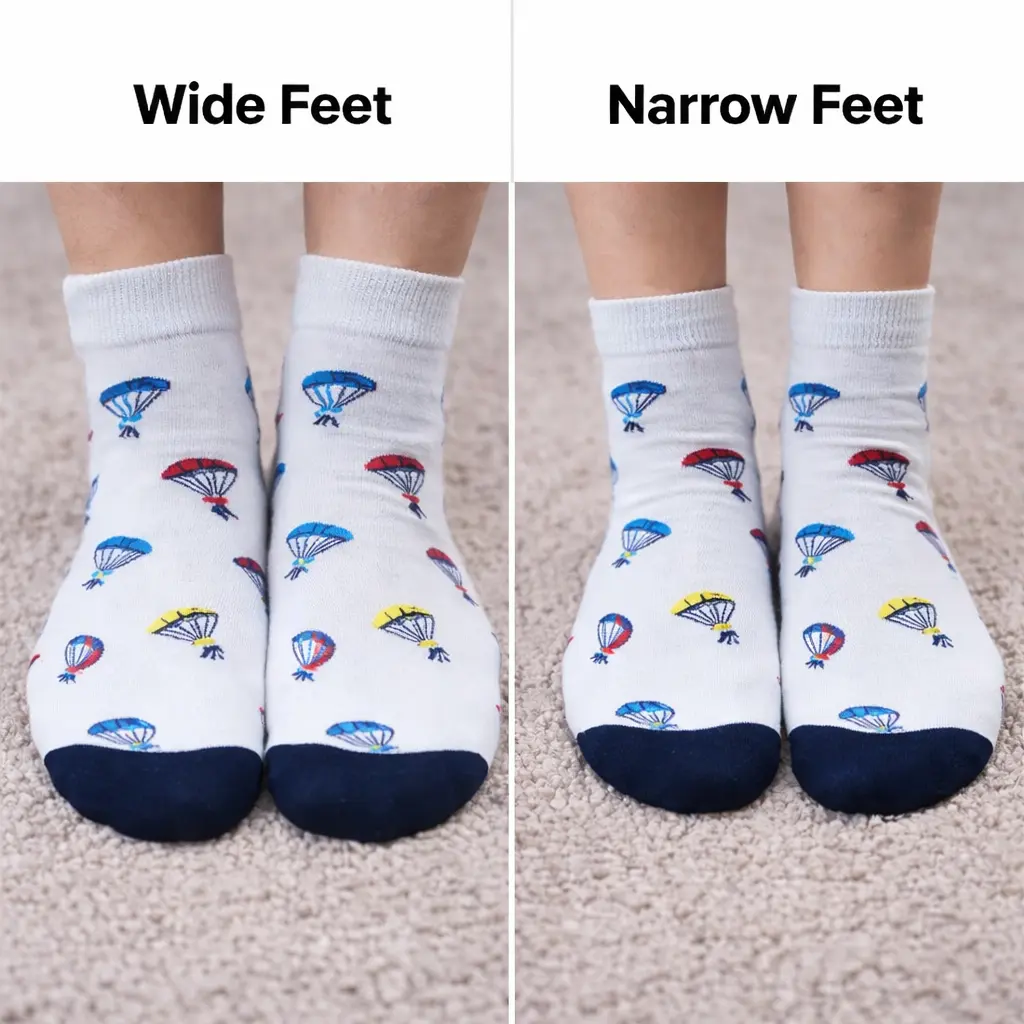 Why Foot Width Matters When Choosing Socks
Not all feet are created equal. Foot width plays a big role in how socks feel, especially in the toe and midfoot areas.
Narrow feet often deal with extra fabric bunching up, especially near the arch or heel. This leads to slipping, friction, or annoying folds underfoot.
Wide feet can feel restricted, especially with tight cuffs or narrow toe boxes. The sock might stretch too much, lose shape, or leave red marks at the seams.
Wearing poorly fitting socks, even just a little too tight or loose, can lead to discomfort, blisters, or increased wear-and-tear.
Why Foot Width Matters When Choosing Socks
Most socks are sized by length, not width. That’s where problems start.
If the sock doesn’t match your foot width:
It stretches too much
It loses shape
It slides or bunches
It causes pressure points
Even slight misfit can lead to:
Blisters
Red marks
Toe seam irritation
Faster fabric thinning
Width affects comfort in the toe box, arch, and cuff area.
Best Sock Features for Narrow Feet
If your socks slide down or bunch up, look for structure and controlled stretch.
1. Arch Support or Compression Bands
Keeps the midfoot secure and prevents excess fabric from folding underneath.
Practical tip: When trying on socks, press your thumb along the arch. If you feel loose fabric, the sock is too wide.
2. Slim or Tapered Designs
Athletic socks often have narrower shaping, especially in running styles.
Look for: “performance fit” or “contoured design.”
3. Lower Stretch Materials
Higher cotton or bamboo content with less elastane holds shape better.
Too much stretch makes narrow feet feel unstable inside the sock.
4. Left/Right Foot Construction
Anatomical socks reduce twisting in the toe area and prevent bunching.
If the toe seam shifts during the day, try this style.
Best Sock Features for Wide Feet
If your socks feel tight or leave marks, you need flexibility and space.
1. Stretchy Fabric Blends
Look for higher elastane (spandex) or nylon content. These adapt to wider foot shapes without thinning out too quickly.
Practical tip: If the fabric turns semi-transparent when worn, the sock is overstretched. Size up or switch to stretch blends.
2. Wide or Seamless Toe Design
Avoid narrow toe boxes that compress toes.
Flat or seamless toe construction reduces rubbing and irritation.
3. Cushioned Footbed
Extra cushioning reduces pressure across a broader foot surface.
Especially helpful for:
Long workdays
Standing jobs
Walking-heavy routines
4. Non-Binding Cuffs
Soft ribbed cuffs prevent digging into wider ankles or calves.
If you see deep sock lines at the end of the day, switch to non-binding designs.
Sock Styles That Work Well for Each Foot Type
Sock Type | Best for Narrow Feet | Best for Wide Feet |
|---|---|---|
No-Show Socks | With grip tabs and arch bands | With extra stretch and low seam lines |
Crew Socks | Slim-fit athletic cuts | Cushioned and stretchy blends |
Dress Socks | Tailored fits with reinforced heel | Seamless toe and soft cuffs |
Compression Socks | Graduated compression models | Mild compression with wider cuffs |
Casual/Fashion Socks | Socks with contour shaping | Bamboo or modal fabric for stretch |
Practical Shopping Tips for Better Fit
These tips save time and reduce returns.
Always Check the Size Chart
Sizing varies by brand. Measure your shoe size and compare.
Between sizes?
Narrow feet: size down
Wide feet: size up
Avoid “One Size Fits All”
These rarely account for width variation.
Choose defined size ranges whenever possible.
Examine the Toe Seam
For wide feet: avoid thick ridged seams.
For narrow feet: make sure the seam sits flat and doesn’t rotate.
Try Performance Socks
Athletic socks often include:
Zoned compression
Breathable panels
Reinforced heel and toe
They usually provide better shape retention for both foot types.
Frequently Asked Questions
1. How do I know if my socks are too narrow?
If your toes feel compressed, the fabric looks overstretched, or you see deep marks after removing them, the socks are too narrow.
2. What happens if socks are too loose?
Loose socks bunch up, cause friction, and increase blister risk.
3. Are there socks made specifically for wide feet?
Yes. Many performance and comfort-focused brands offer stretch blends, seamless toes, and non-binding cuffs designed for wider feet.


